The Rise of Co-Living Spaces in Nigeria: Trend or Future Lifestyle?
 SM
SM
In a country where rent is paid a year or two upfront and "I just moved to Lagos" is practically a trauma category, a quiet revolution in how Nigerians live together is already underway.
Picture this: you pay monthly, your electricity and WiFi are sorted, your flat comes furnished, and your neighbours are vetted young professionals like yourself. No landlord drama. No stealth rent hikes in the middle of the night. No arguments over whose turn it is to fix the generator.
That is the co-living pitch — and in Nigeria's overheated urban rental market, it is starting to land.
What Co-Living Actually Means
Co-living is not a face-me-I-face-you. Let us get that out of the way immediately.
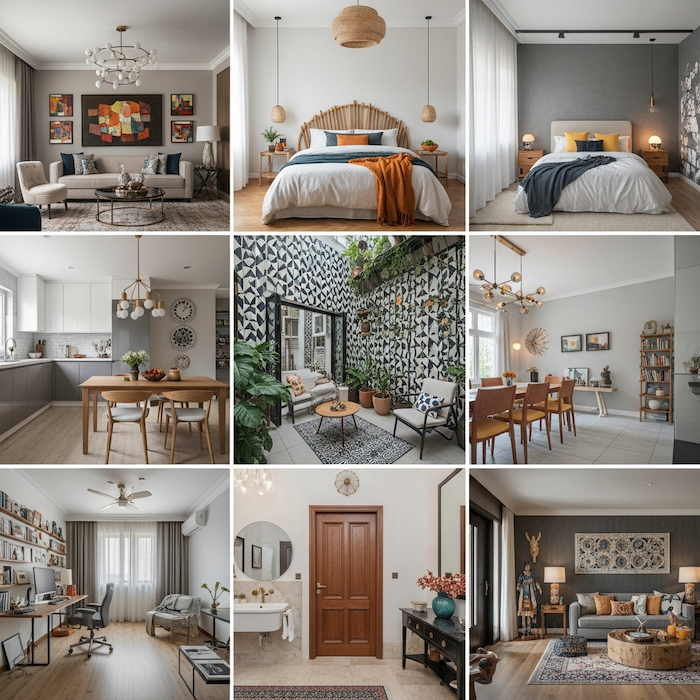
It is a professionally managed living arrangement where residents have private bedrooms — sometimes with en suite bathrooms — but share communal spaces: a kitchen, a lounge, a co-working area, sometimes a rooftop. Think of it as the grown-up, design-conscious version of a student hostel, built for working adults.
The model is well-established in London, New York, Singapore, and Nairobi. In Nigeria, it is newer — but it is here, and it is growing faster than most landlords are comfortable admitting.

Why Nigeria Is Ready for This
Nigeria's housing crisis is not a secret. Between skyrocketing rents, the expectation of lump-sum upfront payments, and the near-impossibility of finding a decent furnished apartment without going through three agents and paying a commission that makes you question your life choices — the conditions are ripe for disruption.
Three specific forces are driving co-living's rise here:
1. The mobile professional. Lagos, Abuja, and Port Harcourt attract tens of thousands of relocating workers every year. These are people who need a good place to land — fast — without a two-year lease commitment. For this group, searching for apartments for rent in Lekki or property for rent in Abuja on a flexible arrangement is not a luxury preference. It is a practical necessity.
2. The cost of living alone. When a one-bedroom flat in Ikoyi costs more than most people earn in a year, sharing premium living infrastructure with four or five other professionals suddenly makes financial sense. You get an address in a good neighbourhood. You split the cost of what you could not afford alone.
3. The loneliness problem nobody talks about. Moving to a new city in Nigeria — especially alone — can be deeply isolating. Structured communal living offers something that a serviced apartment in a high-rise cannot: community. Curated social events, shared meals, casual conversations in the kitchen at 9pm. For many young Nigerians far from home, that is worth real money.
Where Co-Living Is Taking Root
The early adopters of this model in Nigeria are concentrated in the cities where the housing pressure is loudest.
Lagos leads, unsurprisingly. Lekki, Yaba, and Surulere are seeing the first serious co-living operators set up shop — targeting tech workers, creatives, and startup employees. The proximity to co-working hubs and the general young-professional density makes these areas natural fits.
Abuja is not far behind. The capital's transient population — consultants, NGO workers, government contractors — has always needed flexible, short-to-medium-term housing. Properties in Asokoro and the Central Business District are beginning to attract operators who see the demand clearly.
Port Harcourt has its own unique driver: the oil and gas industry. Workers on rotation cycles, contractors between assignments, expats — Port Harcourt's property market has always served a highly mobile population. Co-living is simply a more modern packaging of what serviced apartments were doing for decades.
Calabar is one to watch. With its growing tourism reputation, relative orderliness, and lower cost base, Calabar's property landscape is attracting lifestyle migrants — remote workers and creatives — who want quality of life without Lagos prices. Co-living operators who move early here will find willing residents.
The Challenges — Because Nigeria
Co-living sounds elegant in theory. In practice, a few structural headwinds are slowing its mainstream arrival.
Infrastructure is the elephant in the room. A co-living model depends on reliable electricity, water, and internet. In a country where PHCN remains aspirational and diesel costs can make your eyes water, the operational cost of delivering a seamless experience is genuinely high. Operators either absorb it or pass it to residents — neither option is painless.
The regulatory grey zone. Most co-living operators in Nigeria currently exist in a loosely defined space between residential tenancy and hospitality. Land use regulations, tenancy laws, and local government levies were not written with this model in mind. As the sector grows, regulatory clarity will become urgent. Developers with an eye on Ikoyi or Delta State who want to purpose-build for co-living need to begin navigating this landscape now.
Cultural friction — but less than you think. Nigerians are private people. The idea of strangers in your kitchen carries real psychological resistance, especially for anyone over 35. But younger Nigerians — particularly those who lived in university hostels, studied abroad, or grew up watching global content — are far more open. The cultural conversation is already shifting.
Trend or Future Lifestyle?
Here is the honest answer: both, depending on who you are.
For a 26-year-old software developer who just relocated from Owerri to Lagos, co-living is not a trend — it may be the most rational housing decision available to them right now. For a family of four in a detached house in Magodo, it is simply irrelevant.
Co-living will not replace traditional homeownership. Nigeria's deep cultural attachment to owning land, building a house, and "having something to show" is not going away. If anything, co-living may serve as the bridge — the sensible arrangement people use while they save and build, not the permanent destination.
The smarter question for Nigerian investors and developers is this: are you building the right product for the moment? The urban rental market has millions of underserved young professionals right now. Co-living is one credible answer to that problem.
And the operators who get the infrastructure, the pricing, and the community experience right — in Lagos, Abuja, Port Harcourt, Calabar — will not be chasing a trend. They will be defining a category.
Would you consider co-living as a housing option? What would make it work for you — or what would keep you away?