The Ultimate Guide to Land Banking in Nigeria: Turning Dirt into Gold
 Said M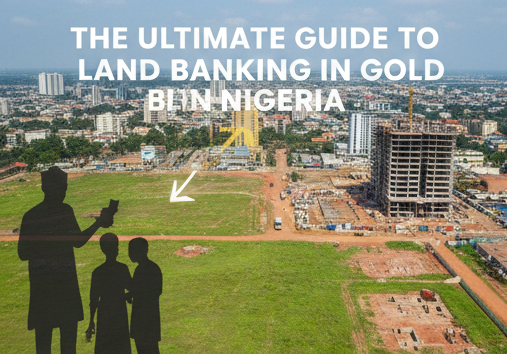
The Ultimate Guide to Land Banking in Nigeria: Turning Dirt into Gold
Introduction In the world of Nigerian investment, there is a popular saying: "Buy land and wait, don't wait to buy land." This is the essence of land banking. It is the practice of purchasing undeveloped land in the path of urban growth, holding it until the infrastructure catches up, and selling it for a massive premium. Unlike stocks or crypto, land is a finite resource that doesn't disappear during market crashes.
Identifying the "Hot Zones" The secret to successful land banking isn't just buying any land; it’s buying land in the right direction of expansion. In Lagos, the shift has moved aggressively toward the Epe and Ibeju-Lekki corridors, fueled by the Lekki Free Trade Zone and the Dangote Refinery. In Abuja, smart money is moving toward Lugbe and Kuje. These are areas where the government is actively planning roads and commercial hubs. If you buy where the bush is today, you will own the gold mine of tomorrow.
Verifying the Title The biggest risk in Nigerian land banking is the "Omonile" factor or overlapping claims. You must ensure the land has a verifiable title. A Certificate of Occupancy (C of O) is the gold standard, but land with a Governor’s Consent or an Excision in Progress can also be lucrative if handled by a legal expert. Never pay a kobo until a surveyor has "charted" the coordinates at the Surveyor General’s office to ensure the land isn't under government acquisition.
The Hold Strategy Land banking is a marathon, not a sprint. Typically, a 3-to-5-year hold period yields the most significant returns. During this time, the value increases through "passive appreciation" as others build around you. To maximize profit, consider "fencing and gating" your plot; a secured, demarcated land attracts a much higher resale price than an open bush.