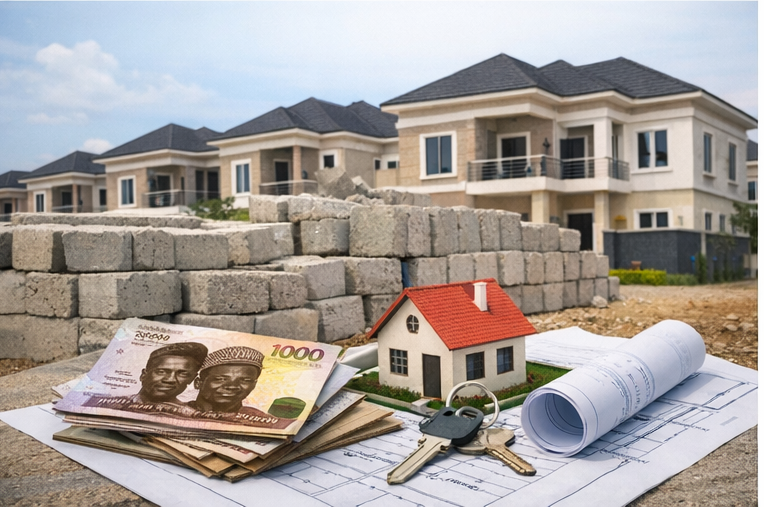
The Reality of the Nigerian Real Estate 'Gold Mine' in 2026
 SM
SM
Ask anyone scrolling through Lagos property listings or attending a real estate seminar, and the question surfaces fast: Does real estate pay well in Nigeria? The honest answer is more nuanced than the highlight-reel success stories suggest — and understanding that nuance is what separates agents who thrive from those who burn out.
The Nigerian real estate sector recorded a 5.4% growth rate in Q3 2024, with projections reaching 6–8% in 2025, according to Octo5 — a trajectory that makes the next 24 months genuinely critical for income growth.
The industry still runs two very different playbooks. The street agent — the classic hustler relying on referrals, cold calls, and sheer foot traffic — operates on unpredictable income and thin margins. The modern consultant, by contrast, builds a structured practice around data, digital visibility, and client trust. Same market. Wildly different results.
What's shifting the equation in 2026 isn't connections or charisma alone. Real estate agent salaries in Nigeria are increasingly determined by how professionals manage leads, maintain their reputation, and leverage verified market intelligence.
The earnings potential is real — but it's no longer a gold mine you stumble into. Understanding the actual commission structures is where the real math begins.
The Math of Commissions: Sales vs. Rentals
Understanding how agents actually get paid cuts through a lot of the noise. Before chasing listings or building a client base, every serious agent needs to internalize one truth: real estate brokerage fees in Nigeria follow a tiered structure, and where you focus your energy determines your cash flow rhythm.
According to Realty Explainer, the standard breakdown looks like this:
Transaction Type | Standard Rate | Frequency | Income Impact |
|---|---|---|---|
Property Sale | 5% – 10% of the sale price | Low (weeks to months per deal) | High single payouts |
Annual Rental | 10% – 15% of annual rent | Moderate (seasonal cycles) | Steady, repeatable income |
Lease Renewals | 5% – 10% of annual rent | Recurring yearly | Passive income potential |
Commercial Lease | 10% of annual rent | Deal-dependent | Mid-to-high payouts |
Rental deals are the bread and butter — sales are the wealth builders. A Lagos agent closing five rental deals monthly on properties averaging ₦2.5 million annually can earn between ₦1.25 million and ₦1.875 million in fees each month without touching a single sales listing. That's reliable cash flow. However, one sale on a ₦150 million Lekki property at 5% earns ₦7.5 million in a single transaction.
Beyond the agent's cut, buyers and tenants also absorb legal fees (typically 2.5% to 5% of the transaction value) and separate agency fees, which means the total cost of a transaction can climb significantly above the listed price. Agents who communicate these costs transparently close deals faster and retain clients longer.
What's shifting the ceiling on those numbers, though, isn't local buyers — it's a growing pool of overseas investors willing to pay a premium for verified, professional service.
The Diaspora Multiplier: Tapping into a $20 Billion Market
The commission math from the previous section only tells part of the story. The bigger question is who is writing the checks — and increasingly, that answer points overseas.
Nigeria's diaspora remittances totaled $20.93 billion in 2024, an 8.9% increase from the previous year. What's changed is where that money is going. A growing share is shifting away from family consumption and toward property acquisition — a tangible, appreciating asset that Nigerians abroad can point to as both a home base and a hedge against currency volatility.
For agents, this shift is significant. Diaspora investors aren't browsing listings casually. They're motivated, pre-qualified, and working with converted USD or GBP. The transaction sizes are larger. But there's a catch.
"The diaspora client doesn't just want a property — they want a professional they can trust from 5,000 miles away."
That trust gap is where real estate agent compensation in Nigeria quietly transforms. Verified, credentialed agents who can offer video walkthroughs, documented due diligence, and transparent fee structures command premium commissions — sometimes negotiated above the standard 5–10% — because they eliminate risk for clients who cannot physically inspect the asset.
Top 3 Diaspora Investment Hotspots
Lekki/Epe (Lagos): High-growth corridors with infrastructure development driving long-term appreciation
Guzape (Abuja): Upscale residential demand from professionals and returning diaspora families
Wuye (Abuja): Emerging mid-tier market attracting first-time diaspora property buyers
In practice, agents who specialize in diaspora clientele are building referral networks that generate deals repeatedly. However, serving this market at scale requires more than hustle — it demands systems. That's exactly where the next challenge surfaces.
Why 'Hustle' Fails: The Case for Digital Automation
The commission structures and diaspora opportunities covered earlier paint an exciting picture — but there's a ceiling most agents hit before they ever reach that potential. It's not a motivation problem. It's a bandwidth problem.
The Manual Ceiling
In practice, an agent managing listings, client follow-ups, property viewings, lease paperwork, and payment tracking by hand can realistically juggle 3 to 4 active deals at once. Beyond that, things slip. Calls go unreturned. Leads go cold. A hot diaspora buyer gets a slower response than a competitor offers, and the deal evaporates. This is the manual ceiling — and it quietly caps what even the most driven agent can earn, regardless of market conditions.
For anyone seriously tracking their real estate agent salary in Nigeria 2026, this bottleneck is the variable that matters most. More listings don't automatically mean more income if the infrastructure to manage them isn't there.
From Paperwork Agent to Deal-Making Consultant
The shift happens when automation absorbs the administrative load. Here's what that looks like in real terms:
Manual Workflow | Automated Workflow |
|---|---|
Manually following up with each lead | Automated responses and lead nurturing sequences |
Tracking listings across notebooks or spreadsheets | Centralized digital listing management |
Scheduling viewings via back-and-forth calls | Self-booking tools with instant confirmations |
Chasing payment documentation | Automated reminders and document storage |
As Vanguard News reported from agent Olumide Akinyemi, "Automation has allowed me to focus on deal-making rather than paperwork." That distinction — consultant versus clerk — is where income scales.
Naijaproperty provides exactly this infrastructure: a platform built to handle listing syndication, lead capture, and client management simultaneously, so agents can run 10 to 15 active opportunities where they previously managed four. That capacity shift is what separates stagnant earners from top-tier consultants — a distinction the next section will quantify by role and market.
Real Estate Agent Salary in Nigeria 2026: Projections by Role
So does real estate pay well in Nigeria? The honest answer is: it depends entirely on where you sit in the value chain. Automation and diaspora leverage — covered in earlier sections — amplify earnings at every level, but the baseline numbers vary significantly by experience and specialization.
Entry-Level Agents (0–2 Years): The Rental Foundation
Entry-level agents typically focus on residential rentals and co-brokering deals alongside established consultants. This stage is about building a client list, learning market rhythms, and stacking small wins. Estimated annual income: ₦1.2M – ₦3.5M ($750 – $2,200), with growth accelerating sharply once a referral network takes hold.
Mid-Level Consultants (3–5 Years): Where Real Money Begins
At this stage, agents blend residential sales with luxury rental portfolios, often handling properties valued between ₦80M and ₦300M. Commission volumes become genuinely life-changing. A single residential sale in Lekki Phase 1 or Maitama can yield more than three months of entry-level income in one transaction. Estimated annual income: ₦6M – ₦18M ($3,750 – $11,250).
HNW Specialists (5+ Years): Commercial and Diaspora-Led Deals
Senior agents focused on commercial assets and diaspora-driven developments operate in a different financial atmosphere entirely. According to PropertyPro and Glassdoor data, real estate agent salaries in Abuja and Lagos remain the highest in the country, fueled by infrastructure growth and pre-election investment cycles. Estimated annual income: ₦25M – ₦80M+ ($15,600 – $50,000).
The location gap is real — an Abuja agent working government-adjacent commercial corridors operates with a fundamentally different earning floor than a counterpart in a secondary market. Recognizing which tier you're building toward is the first step toward treating this career as the structured business it needs to become.
The Path to Becoming a Millionaire Agent
The golden thread running through every section of this article is consistent: professionalism + technology + diaspora access = sustainable wealth. Agents who treat real estate as a structured business — not a weekend hustle — are the ones breaking income ceilings in 2026.
So, does real estate pay well in Nigeria? Absolutely. But the honest caveat is that the market rewards systems, not scrambling. In practice, the agents commanding top-tier commissions are building client pipelines, automating follow-ups, and positioning themselves as trusted guides for international buyers.
The most successful agents in 2026 will be those who bridge the trust gap for international investors — and that requires showing up with credibility, tools, and consistency.
3-Step Action Plan:
Formalize your practice — register, get certified, and build a professional brand
Embrace digital tools — CRM systems, virtual tours, and automated lead nurturing
Target diaspora buyers — position listings for USD-paying international clients
[Join Naijaproperty Today and Access the Tools Built for 2026 Success]
Key Takeaways
Lekki/Epe (Lagos): High-growth corridors with infrastructure development driving long-term appreciation
Guzape (Abuja): Upscale residential demand from professionals and returning diaspora families
Wuye (Abuja): Emerging mid-tier market attracting first-time diaspora property buyers
Formalize your practice — register, get certified, and build a professional brand
Embrace digital tools — CRM systems, virtual tours, and automated lead nurturing