The New Standard: Why Modern Living in Nigeria is a Strategic Investment
 SM
SM
Nigeria's property market is no longer just a place to park money — it's a platform for building genuine, long-term wealth. For anyone searching for the ultimate guide to modern living: life and style tips for Nigerian homeowners, understanding the economics behind today's housing shift is the essential first step.
₦41.3 trillion. That's the revalued worth of Nigeria's real estate sector following the 2024 GDP rebasing, cementing it as the country's third-largest economic contributor, according to the National Bureau of Statistics.
That number reframes everything. A well-appointed home in Lagos, Abuja, or Port Harcourt isn't simply a lifestyle choice — it's a strategic asset in one of Africa's most dynamic economies.
🏠 Market Reality
Nigeria faces a housing deficit of over 22 million units, meaning demand for quality residential space will far outpace supply for the foreseeable future. Every modern upgrade — from smart finishes to energy-efficient systems — directly increases a property's resale and rental premium.
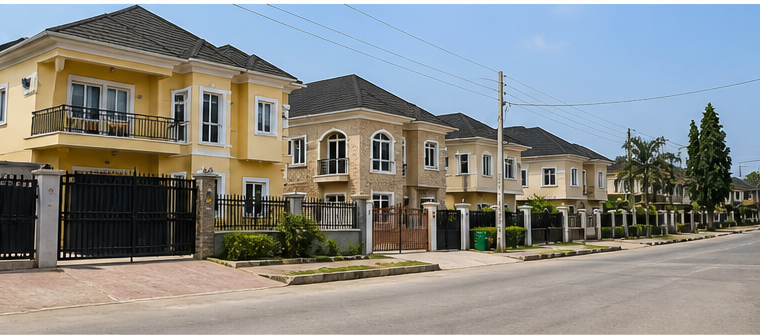
The transition away from traditional face-me-I-face-you compounds and basic block flats toward Smart Estates reflects a broader cultural shift. Today's modern Nigerian homeowner is younger, globally informed, digitally connected, and unwilling to compromise on comfort or security. They expect amenities that solve real local problems — not just aesthetics borrowed from international property catalogs.
What's driving that smart estate revolution, and which technologies are redefining residential standards in 2026? That's exactly where we're headed next.
The Smart Estate Revolution: Solving Local Challenges with Technology
Nigeria's infrastructure challenges have always shaped how people live — but in 2026, forward-thinking developers are flipping that script entirely. Modern estates are no longer just walled compounds; they're engineered ecosystems built to outsmart grid failures, security gaps, and rising utility costs. For homeowners researching the best resources — from YouTube deep-dives to the ultimate guide to modern living: life and style tips for Nigerian homeowners — one pattern is consistent: technology adoption is no longer optional.
Smart Security: Gates That Work While You Sleep
App-controlled access is fast becoming the baseline expectation in gated communities across Lagos, Abuja, and Port Harcourt. What was once considered luxury is now a practical safety standard. Modern Nigerian residential developments are increasingly transitioning into smart estates integrating app-controlled gates, CCTV surveillance, and real-time visitor management systems.
Remote gate access via smartphone
Motion-triggered CCTV alerts
Visitor ID logging and playback
Integrated Solar: Power as Infrastructure, Not a Luxury
Reliable electricity is a non-negotiable for modern Nigerian living. Estates that bundle integrated solar systems with backup storage are no longer premium outliers — they're becoming the community benchmark.
Hybrid inverter setups with lithium battery banks
Estate-wide solar distribution reducing diesel dependency
Seamless grid-to-solar switching
Smart Meters and Energy Efficiency
Managing energy costs is where technology delivers its most measurable impact. According to sstore.ng, smart home automation helps Nigerian homes save 15–25% on electricity in 2026 by identifying waste patterns and automating high-draw appliances.
Real-time consumption dashboards
Automated load management during peak hours
Prepaid smart metering for transparent billing
Once your home's infrastructure is future-proofed, the next step is equally important: making sure your interior spaces reflect that same intentionality — and that starts with mastering the design styles defining Nigerian homes right now.
Mastering Nigerian Interior Design Styles: From Minimalist to Eclectic
With smart infrastructure now solving the structural problems of modern Nigerian living — reliable power, security, and connectivity — the next question becomes more personal: what does the inside of your home say about you? Understanding the dominant design movements shaping modern living room trends in Nigeria for 2026 is the first step toward making choices that are both visually compelling and financially smart.
Minimalism: The Cost-Effective Modern Standard
Minimalism isn't new, but it's never been more relevant. As Dek Global notes, "minimalism has constituted a major design trend in interior decor, especially in Nigeria… it is cost-effective and it gives you a cleaner, clearer and more peaceful space." For homeowners working within a defined budget — or furnishing a short-let property — this philosophy is enormously practical. Fewer pieces, chosen deliberately, deliver maximum impact with minimum spend.
However, the cold, grey minimalism of the early 2010s is fading fast. The Warm Minimalist trend replaces stark white walls and chrome finishes with terracotta accents, warm woods, and muted ochre tones that feel distinctly Nigerian. Think clean lines with soul.
Eclectic Style: Where Tradition Meets the Contemporary
On the other end of the spectrum, the eclectic approach is gaining serious traction among homeowners who want their space to tell a story. The formula is straightforward: pair a sleek, modern sofa with a hand-carved Yoruba stool, or hang Uli-inspired textile art above a minimalist console table. The contrast doesn't clash — it converses.
Pro-Tip — The 3-5-7 Rule: When arranging decorative objects on a shelf, console, or coffee table, always group them in odd numbers. Interior design standards confirm that the 3-5-7 rule — placing items in groupings of three, five, or seven — creates arrangements that feel more natural and visually balanced to the human eye. Try three varying-height vases, or five textured objects in complementary earth tones.
Style | Vibe | Cost Level |
|---|---|---|
Classic Minimalist | Clean, calm, contemporary | Low–Medium |
Warm Minimalist | Earthy, inviting, grounded | Medium |
Eclectic | Bold, cultural, expressive | Medium–High |
Traditional Nigerian | Heritage-rich, ceremonial | Varies |
Choosing your style is only the foundation. The real decisions — which sofa configuration dominates 2026, which color palettes are replacing white across Lagos and Abuja, and how AI-powered appliances are reshaping room layouts — are where the details get exciting.
Modern Living Room Trends in Nigeria for 2026
The living room has always been the heartbeat of a Nigerian home — where family gathers, guests are impressed, and style speaks before words do. In 2026, that space is evolving fast. Nigerian interior design styles are moving beyond borrowed aesthetics and settling into something distinctly their own: bold, functional, and culturally grounded.
Here are five trends defining the modern Nigerian living room this year:
The Eminent and Wura Sofa Configurations Are Leading the Market Sectional and modular seating is dominating Nigerian living spaces. According to Beveledge Designs, the Eminent and Wura 4,3,1,1 configurations are among the most sought-after sofa sets for 2026 — offering flexible layouts that suit both open-plan apartments and more compact city flats.
Furniture Pick: The Wura 4,3,1,1 configuration offers a complete seating solution for large family living rooms, while the Eminent's cleaner lines work beautifully in minimalist or Afro-contemporary spaces.
Color Palettes Are Getting Warmer and More Intentional White walls are giving way to richer tones. Think terracotta, warm ochre, dusty clay, and deep burnt orange — hues that reflect the landscape and light of Lagos and Abuja. These "Lagos Earth" and "Abuja Sunset" tones create warmth without heaviness, and they photograph exceptionally well.
The 'Short-Let Look' Is Influencing Everyday Design Choices High-aesthetic, low-clutter interiors — popularized by short-let apartments — are filtering into owner-occupied homes. More homeowners want spaces that feel curated, not just furnished.
AI-Powered Appliances Are Becoming Living Room Staples Smart TVs, automated lighting, and AI-powered home appliances are increasingly standard in modern Nigerian homes, helping to optimize energy use and elevate everyday experiences. Designing around these devices — with intentional cable management and smart speaker placement — is now part of the layout conversation.
Statement Ceilings and Feature Walls Are Replacing Generic Finishes Homeowners are investing upward, literally. Coffered ceilings, bold wallpaper panels, and recessed lighting rigs are turning living rooms into rooms worth remembering.
Design Note: The most resilient living room layouts for 2026 balance visual drama with practicality — especially for homes doing double duty as short-let investments.
That last point is worth expanding on. As more Nigerian homeowners look at their property not just as a home but as a revenue-generating asset, design decisions are increasingly being made with guests — and returns — in mind.
The Short-Let Opportunity: Designing for Revenue
Modern design isn't just about personal taste — it's increasingly a business decision. As the living room trends covered earlier show, Nigerians want spaces that feel elevated yet livable. That intersection is exactly where the short-let market thrives.
The numbers back this up. According to the Lagos Shortlet Market Report 2025, the short-let rental market in Lagos generated an estimated ₦281.03 billion in revenue in 2025, up from ₦264.3 billion the year before. That's a market too significant for any homeowner or investor to ignore.
A key driver of that growth? The Nigerian diaspora. Returning visitors and overseas Nigerians consistently gravitate toward listings that feel homely but polished — spaces that blend familiar warmth with the modern amenities they've grown accustomed to abroad. Generic hotel-style interiors don't convert; curated homes do.
Checklist for Short-Let Success
Apply the 3-5-7 rule in interior design — group decorative objects in odd numbers to create visual balance that photographs well and impresses guests instantly
Stock high-quality linens, blackout curtains, and adequate storage — small comforts drive five-star reviews
Choose neutral base tones with bold accent pieces that are easy to swap seasonally without full redecorating
Install smart home features — keyless entry and automated lighting signal professionalism
Use durable, easy-clean materials on high-traffic surfaces to reduce maintenance costs between bookings
Ensure reliable backup power is visible and functional — it's a top search filter for Lagos guests
Display subtle cultural touches — woven textiles or curated local art — without overwhelming the space
In practice, a well-designed short-let can reduce maintenance spend significantly, because quality finishes simply last longer under repeated guest use. The upfront investment pays forward.
Of course, great design alone won't future-proof your property. That conversation leads naturally into the next consideration: building a home that works with Nigeria's climate rather than constantly fighting it.
Sustainable Living: Eco-Friendly Upgrades for the Nigerian Climate
Design choices in 2026 carry real environmental weight, and Nigerian homeowners are increasingly recognizing that building or renovating sustainably isn't idealism — it's pragmatism. As Decorcity.com.ng notes, designing sustainable homes in Nigeria centers on natural cooling strategies and eco-friendly materials that meaningfully reduce long-term operational costs.
Cooling Without the Constant AC
Cross-ventilation remains one of the most underused tools in Nigerian residential design. Positioning windows on opposing walls, incorporating louvered panels, and raising ceiling heights all encourage airflow that cuts dependence on air conditioning units significantly. In practice, homes designed around prevailing coastal or harmattan wind patterns stay noticeably cooler without mechanical intervention. Smart estates Nigeria developers are already embedding these passive cooling principles into new builds, proving that thoughtful architecture outperforms expensive equipment.
Materials and Finishes That Work With the Climate
Eco-friendly paint formulations — particularly low-VOC and water-based options — are gaining traction in 2026 for good reason. They perform better in high-humidity environments, resist mold, and release fewer toxins indoors. Beyond paint, natural materials like compressed earth blocks and bamboo composite flooring regulate indoor temperature passively. Water conservation systems, including rooftop rainwater harvesting and low-flow fixtures, round out a genuinely sustainable home strategy for urban households battling inconsistent municipal supply.
Sustainability isn't a design trend — it's the foundation every other Nigerian home upgrade should be built on.
Key Takeaways
Remote gate access via smartphone
Motion-triggered CCTV alerts
Visitor ID logging and playback
Hybrid inverter setups with lithium battery banks
Estate-wide solar distribution reducing diesel dependency